
Bhakti Yoga Practice in Daily Life: Kirtan, Bhajan and Devotion
A path of love, made of small daily acts: a name remembered, a song sung, a meal offered.

Abhilash Ramakrishna
06 Nov 2026 • 6min
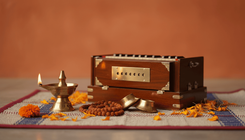
Bhakti yoga practice is the path of reaching the divine through love and devotion, rather than through study or austerity. It asks for very little: a voice, a few quiet minutes and a willingness to turn the heart towards God. This article explains what bhakti yoga means and how kirtan (call-and-response singing of the divine names), bhajan (devotional song) and smaller daily acts fit into an ordinary day.



Devotion as a way of living
Hindu thought speaks of several paths to the divine. The Bhagavad Gita, for example, discusses jnana (knowledge), karma (selfless action) and bhakti (devotion) as ways of yoga. They are less rival schools than different temperaments. Someone drawn to inquiry follows jnana, someone who works for others follows karma, and someone whose strongest feeling is love follows bhakti.
What marks bhakti is that it is a relationship. The divine is not an idea to be worked out but someone to be loved, thanked, argued with and missed. The devotee may relate as a child, a friend, a servant or a beloved, and the traditions have a word for each. Relationships live in daily contact, not in occasional grand gestures, which is why bhakti suits ordinary life so well.
What bhakti yoga means
The word bhakti is usually traced to the Sanskrit root bhaj, which carries the sense of sharing, partaking and revering. Yoga here means union, or a disciplined practice that leads towards it. Bhakti yoga is therefore the discipline of loving: training the attention and the feelings, again and again, towards the divine.
The word discipline matters. The Narada Bhakti Sutra, a classical text on the path, describes bhakti as intense love for God. Yet the texts and the saints agree that such love is cultivated. It grows through repetition, through the company of other devotees, through listening and service, much as any deep affection grows through time spent together.
A devotional day
Nothing here needs to be elaborate. A day can hold a few small points of turning:
- Morning: light a lamp or sit before a picture of your chosen deity (ishta devata), say a name or a short prayer, and offer the day.
- Through the day: keep remembering. Many people repeat a name silently while walking, cooking or travelling. This is smarana, remembrance, and it turns idle minutes into practice.
- Meals: offer the food mentally before eating, and receive it as prasad, a gift returned.
- Evening: sing, alone or with family or a satsang group. This is where bhajan and kirtan usually belong.
- Before sleep: a moment of gratitude, and of setting down the day's resentments.
Keep it small enough to sustain. Ten sincere minutes every day are closer to the spirit of bhakti than an hour kept up for a week and then dropped.
Kirtan and bhajan: why singing
Kirtan and bhajan are the most visible forms of devotional singing, and they are not quite the same thing. Kirtan is typically call-and-response. A leader sings a line, usually built around divine names, and the group sings it back, often growing faster and louder. It is commonly accompanied by a harmonium, a drum such as the mridanga or dholak, and hand cymbals.
Bhajan is a devotional song with verses and a meaning to follow, often composed by a saint-poet. One person can sing it in a quiet room, or a whole gathering can. In practice the line blurs, and many evenings move from one to the other.
Singing works as practice because it gives the restless mind something to hold. The words carry meaning, the melody carries feeling, and the breath and voice bring the body in. When a group sings together, self-consciousness tends to loosen. The tradition does not measure a bhajan by how polished it sounds. What counts is attention and sincerity.
Every region has its own voice. Bengal has the congregational sankirtan associated with Chaitanya Mahaprabhu, Maharashtra has the abhangs of Tukaram, and the verses of Mirabai, Kabir and Tulsidas are sung across north India. Purandara Dasa is remembered in the Carnatic tradition of the south. Singing in a language you understand makes the practice yours.
Singing is only one of nine
The Bhagavata Purana, in the words of the young Prahlada, names nine forms of devotion:
- shravana, listening to the divine stories and names
- kirtana, singing them
- smarana, remembering
- padasevana, service at the divine feet
- archana, ritual worship
- vandana, bowing in salutation
- dasya, serving as a servant
- sakhya, friendship with the divine
- atmanivedana, complete self-offering
Kirtan is one item on this list, and a person who cannot sing is not shut out. Listening attentively to a katha, caring for an elderly parent as an act of service, or bowing with real presence are all bhakti practice. Most devotees lean on two or three of the nine and let the rest grow slowly.
A common misunderstanding
Some assume bhakti is mere emotion, a path for people who would rather not think. The tradition says otherwise. Devotional texts name humility, truthfulness, compassion and freedom from hatred as marks of the true devotee, and the Gita describes the person dear to God largely in these terms. Feeling that does not change the way you treat people is not considered ripe.
Another assumption is that you need a particular deity, a guru or a temple. Practice differs by sampradaya and family. Many devotees worship a form such as Rama, Krishna, Shiva or Devi, while saints like Kabir sang of a God beyond form. Most traditions do recommend a teacher or a satsang for guidance, but the daily practice begins in your own home.
The real measure of bhakti is not tears or ecstasy. It is a gradual softening of the ego: a little more patience, a little more gratitude, a little less need to be right.
Common questions
Do I need to know Sanskrit or sing well to practise bhakti yoga?
No. Bhajans exist in nearly every Indian language, so you can sing in Hindi, Tamil, Marathi, Bengali or any language you understand, and a simple repeated name is a complete practice. Many kirtan groups welcome beginners who simply echo the leader.
How long should I do bhakti yoga practice each day?
There is no fixed rule, and sampradayas differ. Beginners often start with ten to fifteen minutes at a steady time, such as dawn or dusk, and let it lengthen on its own. Regularity matters more than duration.
Can I practise bhakti yoga without an idol or a temple?
Yes. A lamp, a picture, a flower or simply the mental image of your ishta devata is enough, and the practice of naming and remembering needs no object at all. Some traditions, including the nirguna bhakti of saints like Kabir, centre on the formless divine and use no image.

Related Articles


