
Ghee in Ayurveda: properties, benefits and how to use it
The oil of wisdom, medicine and nourishment

Dharmayana
01 Oct 2026 • 7min
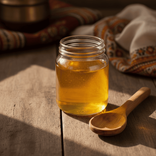
In Ayurveda, ghee—also known as ghrita in Sanskrit—is far more than clarified butter. It is a sacred substance with profound healing properties, used for thousands of years to nourish the body, sharpen the mind and prepare the body to receive medicine. Ghee holds a unique place in Ayurvedic practice because it can be used by anyone, in any season, and it improves with age.



What ghee is and why it matters
Ghee is butter that has been gently heated until the water evaporates and the milk solids sink and can be removed, leaving behind only pure butterfat. The process is simple, but the result is transformative. What remains is stable, shelf-stable and free from the lactose and casein that make dairy difficult for many people to digest.
In Ayurvedic texts, ghee is prized because it is not just food—it is a vehicle for medicine. When herbs are infused into ghee, they penetrate deeper into the tissues than they would alone. Ghee also has the rare quality of enhancing the potency of other substances it is combined with, which is why it appears in countless Ayurvedic formulations. As ghee ages, its healing properties deepen, and a pot of ghee kept for years is considered more valuable than a fresh one.
How ghee relates to the three doshas
In Ayurveda, the three doshas—vata, pitta and kapha—govern how your body functions. Ghee's relationship to each is different, which is one reason it suits everyone.
Ghee is cooling in nature, which makes it particularly balancing for pitta dosha. If you tend towards heat, inflammation or irritability, ghee helps bring ease. For vata dosha, which is dry and mobile by nature, ghee provides grounding nourishment and lubrication. It is especially settling when consumed warm. For kapha dosha, which is naturally heavy, ghee in moderation supports digestion without increasing sluggishness. The key is amount: a little ghee benefits all constitutions, but someone with kapha imbalance uses it more sparingly than someone with vata constitution.
Ghee for digestion and the digestive fire
One of ghee's most valued uses in Ayurveda is its effect on digestive strength. Ghee gently kindles agni, the digestive fire, without aggravating pitta. A small spoonful of warm ghee taken with meals helps the stomach and intestines absorb nutrients more completely. It also lubricates the digestive tract, making it especially helpful for people whose digestion is dry or prone to constipation.
Ghee also protects the lining of the gut. In Ayurvedic understanding, a healthy digestive tract is the foundation of health throughout the body, and ghee's unctuous quality soothes and seals the intestinal wall. This is why ghee is often recommended during cleansing protocols and healing diets.
Ghee for the skin and sense organs
Applied to the skin, ghee is deeply nourishing. It penetrates beyond the surface to soften and hydrate the deeper layers. Many people use ghee as a facial oil, especially in winter or when the skin is dry or inflamed. It can be warmed slightly and massaged gently into the face before bed, or mixed with other oils and herbs for specific skin conditions.
Ghee is also used to care for the eyes and ears. A drop of warm ghee placed in the corner of the eye or a few drops warmed and placed in the ear canal are traditional Ayurvedic practices. These should be done gently and mindfully, and some practitioners recommend doing this under guidance the first time.
Ghee in daily practice and seasonal use
Many people take a small spoonful of ghee each morning, either on its own or stirred into warm milk or warm water with spices. This is a simple daily practice that supports overall health and vitality. Ghee can also be used as a cooking medium: it has a higher smoke point than most oils, making it suitable for sautéing and cooking at moderate heat. The warmth of cooking does not diminish ghee's healing properties in Ayurvedic understanding—it activates them.
Ghee is beneficial year-round, but it is especially valuable during vata season (autumn and early winter), when the air is dry and the body needs grounding. In summer, when pitta is naturally high, smaller amounts of cooling ghee help maintain balance without building excess heat.
How to choose and store ghee
Desi ghee—ghee made from the milk of Indian cow breeds—is traditionally considered the most potent, though ghee made from any good-quality butter carries Ayurvedic value. What matters most is that the source butter comes from grass-fed cows raised with care, not from industrial dairy. If you make ghee at home, you know exactly what has gone into it. If you buy it, seek out suppliers who prioritise quality and purity over scale.
Store ghee in a cool, dry place in a glass container. It does not need refrigeration and will keep for months or years. Over time, it may develop a subtle crystalline texture or change colour slightly—this is natural and does not affect its quality. Many Ayurvedic practitioners believe that ghee improves with age, gaining deeper healing properties the longer it sits.
How to use ghee in your daily practice
- Start with a small amount Begin with half to one teaspoon of ghee, taken once a day. If you are new to this practice, a smaller amount helps your body adjust. You can increase gradually as you feel comfortable.
- Warm the ghee gently Warm your ghee in a small cup by setting it in hot water, or mix it into a warm drink. Warm ghee is more digestible and more easily absorbed than cold ghee.
- Take it in the morning or with a meal Consume ghee in the morning on an empty stomach or with breakfast. If morning feels too strong, take it with a midday meal instead, stirred through rice or mixed into warm milk.
- Notice how your body responds Pay attention over a few weeks. You may notice clearer skin, better digestion, or a feeling of greater steadiness. If you feel any discomfort, reduce the amount or speak to an Ayurvedic practitioner.
- Adjust for your dosha If you are pitta or vata-dominant, ghee is especially settling. If kapha is your primary imbalance, keep your amount moderate and consider taking it with warming spices like ginger or turmeric.
- Use ghee for cooking when possible Replace some of your usual cooking oil with ghee for sautéing vegetables or tempering spices. This integrates ghee into your routine without requiring an extra step.
Common questions
Can I use regular ghee or does it have to be desi ghee?
Any ghee made from good-quality butter has Ayurvedic value, but desi ghee—from Indian cow breeds—is traditionally considered most potent. What matters most is that it comes from grass-fed cows and is free from additives. If desi ghee is not available to you, quality matters more than origin.
How much ghee should I take each day?
Start with half to one teaspoon daily and adjust based on your constitution and digestion. Vata types benefit from slightly more; kapha types do better with less. If you are taking ghee for a specific condition, an Ayurvedic practitioner can suggest a dose suited to you.
Is ghee safe if I have high cholesterol?
Ghee is understood differently in Ayurveda than in Western nutrition. That said, work with a healthcare provider who understands both systems. Many people find that ghee taken in small amounts as part of a balanced Ayurvedic routine supports overall health, but individual needs vary.

Related Articles


