
How to Perform Ghatasthapana During Navratri
Begin the Nine Nights With Sacred Seedlings

Abhilash Ramakrishna
09 Oct 2026 • 9min
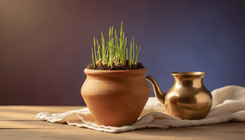
Ghatasthapana is the ritual sowing of seeds during Navratri that marks the beginning of the nine-day festival. In this practice, barley or other seeds are sown in a clay pot filled with soil, and kept in the home as they grow. By the time Navratri ends, the seedlings become tall enough to harvest. Devotees then place them on the ears of family members as a blessing, or offer them at the temple. Learning the ghatasthapana vidhi, or method, helps you honour the festival tradition and bring the energy of growth and renewal into your home.
The ritual connects to the larger story of Navratri itself. The festival celebrates the victory of the divine feminine—Durga and her forms—over forces of disorder. Sowing seeds and nurturing them through the nine nights mirrors this theme of creation and restoration. By keeping vigil over the seedlings as they grow, you participate in a very tangible version of this spiritual renewal. Many families have kept this practice alive for generations, making it both a ritual and a living tie to their lineage.



Why Perform Ghatasthapana
Ghatasthapana is not simply an agricultural metaphor. The growing seedlings in your home remind you daily of Navratri's spiritual work. Each time you water them or check their growth, you mark the passage of the nine nights. When you harvest and wear them on Dussehra, the day Navratri concludes, you carry that energy of growth and victory forward. Some practitioners see the barley seedlings (called javaare) as a form of blessing—a gift from the earth that purifies and protects the wearer. Others focus on the ritual's connection to spring harvest cycles and the turning of the seasons.
The pot itself matters. Choosing clay rather than plastic or ceramic connects you to the earthiness of the practice. Clay is the material closest to soil itself, and using it grounds the ritual in simplicity. Many households use the same pot year after year, creating continuity between festivals and deepening the practice over time.
When to Begin Ghatasthapana
Ghatasthapana is performed on the first day of Navratri, also called Pratipada. This is a lunar date that shifts each year according to the Hindu calendar, so you will need to check your local panchanga (Hindu almanac) or a reliable festival calendar to know the exact date for your year. The first day is when you sow the seeds; from that point forward, you water and tend them every day until Dussehra arrives.
Timing your setup matters less than consistency once you begin. Most people sow their seeds early in the morning, at an auspicious hour if they follow such guidance. The key is that the seeds have nine full days to grow, which they generally have if sown on the first day and harvested on the tenth day (Dussehra). Even if you miss the first morning, you can sow the seeds at any point on the first day and still observe the full practice.
Choosing Your Pot and Seeds
A small clay pot, traditionally called a ghat, is ideal for this ritual. You can find these at pottery workshops, temple shops, or online vendors that sell items for Navratri. A pot about four inches high and three inches across is a good size. If you cannot find a traditional clay pot, a small earthenware vessel or even a shallow ceramic dish works, though clay remains closest to the tradition.
Barley seeds (javaare) are the most common choice, and they germinate reliably within the nine-day window. You can also use other grains like wheat or mung beans. The seeds should be fresh and of good quality. Soak them for a few hours before sowing to speed up germination, though this is not essential. You will also need soil—garden soil or potting mix works equally well. Use enough to fill the pot to within an inch of the rim.
Setting Up Your Ghatasthapana
Begin by filling your pot with moist soil, leaving about an inch of space at the top. Scatter the soaked seeds across the surface, pressing them gently into the soil so they make contact with moisture. Cover them lightly with more soil—just enough that they are no longer visible. The seeds should be held in place but not buried so deeply that they cannot push through.
Place your pot in a location where it will receive indirect sunlight and stay at a moderate temperature. A windowsill indoors, a shelf in a kitchen corner, or a room altar are all suitable. The seeds need light to grow strong green shoots, so complete darkness will result in pale sprouts. However, intense direct sun can dry the soil too quickly. A spot that gets a few hours of gentle morning or afternoon light is ideal.
Water the pot gently every day, ensuring the soil stays moist but never waterlogged. Overwatering causes the seeds to rot; underwatering halts their growth. Check the soil with your finger each day. If it feels dry an inch below the surface, water it lightly. Most pots will need watering once daily, sometimes twice in very warm weather.
Caring for Your Seedlings Through Navratri
By the third or fourth day, you should see the first shoots emerging. As the seedlings grow taller, they may lean toward the light source. You can gently rotate the pot a quarter turn each day to encourage straight, balanced growth, though this is not necessary. Some people water their pots while offering prayers each evening, making the watering itself a moment of daily meditation.
If mold or fungus appears on the soil surface, this usually means the pot is staying too wet or the air around it is too still. Allow the soil to dry slightly between waterings and increase air circulation by moving the pot to a more open location. Pests are rarely a problem indoors during the nine days.
By the time Navratri ends, your seedlings should be several inches tall with bright green leaves. If your home is warm and well-lit, they may grow even taller. There is no single correct height—the practice lies in the daily tending, not in achieving a specific outcome.
Harvesting and Blessing
On Dussehra, when Navratri concludes, you harvest the javaare. Gently uproot the seedlings, keeping the roots and soil intact if possible, and allow them to dry for a few hours. Devotees then place a bundle of the fresh shoots behind or above the right ear as a blessing, or wear them as a talisman. Children particularly enjoy this moment of receiving the blessing from their elders.
If you prefer not to wear them yourself, you can offer the seedlings at your home altar or at a nearby temple. Many temples accept offerings of javaare on Dussehra morning. Some families share them with relatives or friends as a gift. The seeds have served their purpose by the time you harvest them, so there is no wrong way to complete the ritual.
After the festival, compost the remains of the plant and soil, returning them to the earth. Some people keep their clay pot and use it again the next year, deepening the continuity of their practice.
Perform Ghatasthapana
- Fill your pot with soil Use a small clay pot about four inches high. Fill it with garden soil or potting mix, leaving an inch of space at the top. Moisten the soil lightly before you begin.
- Prepare and sow the seeds Soak barley or wheat seeds in water for a few hours. Scatter them across the soil surface and press them gently into contact with the moist earth. Cover lightly with more soil so they are no longer visible.
- Place the pot in the right location Put your pot where it will receive a few hours of indirect light each day, such as near a window or on a home altar. Avoid direct intense sun or complete darkness.
- Water daily throughout Navratri Check the soil each day with your finger. Water gently when it feels dry an inch below the surface. Keep it moist but never waterlogged. Most pots need watering once daily.
- Harvest on Dussehra When Navratri ends on Dussehra, gently uproot the seedlings and allow them to dry. Place them behind the right ear as a blessing, or offer them at a home altar or temple.
Common questions
What do I do if my seeds don't sprout by day three?
Barley and wheat usually show shoots by day three or four. If nothing has appeared by day five, the seeds may have been old or the soil too dry or cold. Check that your pot is in a spot where it gets some light and stays at a comfortable room temperature. You can still continue the ritual with the seeds you have; sometimes slower-growing varieties take the full nine days to germinate.
Can I perform ghatasthapana outside instead of indoors?
Yes, you can keep your pot on a balcony, terrace, or garden as long as it is sheltered from strong wind and heavy rain. Outdoor pots may grow faster due to more light and air, but they also dry out more quickly, so you will need to water them more frequently. Indoors is more convenient for daily monitoring.
What if I forget to perform ghatasthapana on the first day of Navratri?
You can sow your seeds at any point during the nine days if you miss the first day. The ritual's purpose is in the daily tending and the connection to growth, so beginning late is better than not beginning at all. Your seedlings will have fewer days to mature, but they will still be harvestable by Dussehra.

Related Articles


