
How to Perform Narasimha Jayanti Puja at Home
A step-by-step guide to celebrating the fierce incarnation of Vishnu with home worship

Abhilash Ramakrishna
21 Oct 2026 • 7min
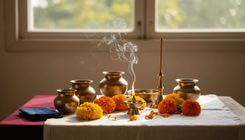
Narasimha Jayanti marks the birth of Narasimha, the fierce fourth incarnation of Vishnu who appeared as a half-man, half-lion to protect his devotee Prahlad from his demonic father Hiranyakashipu. Performing Narasimha puja at home lets you connect with this powerful form of divine protection and devotion. This guide walks you through the complete worship practice.



Preparing yourself and your space
Begin by bathing and changing into clean clothes, ideally wearing white or yellow. Choose a clean, quiet corner of your home for the puja space—a small shelf, table or altar works well. Face east or north as you set up. Spread a clean cloth on your puja surface and arrange your items in order before beginning.
Purify the space mentally by sprinkling a few drops of water around the area, or light incense and move it gently through the space. This clears the atmosphere and helps you settle into a focused state of mind.
Setting up the altar
Place an image or idol of Narasimha at the centre of your puja space. If you have a small statue, position it on a raised platform. Arrange flowers, preferably red or yellow ones like marigolds, chrysanthemums or lotus flowers if available, on either side. Place a small bowl or cup of water, known as achamana, to the right of the image—this is used for ritual purification throughout the puja.
Set out your offerings in small bowls: uncooked rice, sesame seeds or other grains, incense, and a small lamp or diya filled with oil or ghee. Have a spoon or ladle ready for pouring water, and keep a bell within easy reach to ring during the worship.
Invoking Narasimha
Ring the bell three times to announce the beginning of worship and to call the divine presence. Sit comfortably in front of the image, preferably cross-legged. Take a moment to calm your mind and bring your attention to the figure of Narasimha.
Offer water from the achamana bowl to your right hand, then touch your lips lightly as an act of purification. This gesture is called achamana and is performed at several points during the puja to keep your actions spiritually clean. Repeat the mantra "Om Namo Bhagavate Narasimhaya" three times. This translates to "Salutations to the Lord Narasimha" and is the primary invocation for this form of Vishnu.
Making the offerings
Begin with flowers. With respect, place flowers at the feet of the image while mentally offering your devotion. Hold each flower briefly and state your intention—whether it is protection, strength, or removing obstacles. Flowers represent the beauty and fragility of devotion.
Next, offer incense by lighting a stick and circling it gently before the image in a clockwise direction, moving it from left to right and back. Incense carries your prayers upward and is believed to invite divine grace. As the fragrance fills your space, silently repeat the mantra or speak words of gratitude.
Light the lamp next. This is a key moment in the puja. The flame represents the divine light that destroys ignorance and fear—qualities Narasimha embodies. Let the flame burn steadily as you continue your worship.
Sprinkle rice or grains around the base of the image, or place them in a small dish as a food offering called naivedya. If you have prepared khichdi, halwa or another simple dish, offer a small portion on a plate. Speak the words "I offer this food with love and devotion" as you make the offering.
Chanting and prayer
Sit quietly and chant the Narasimha mantra, "Om Namo Bhagavate Narasimhaya," 11 times, 21 times or 108 times, depending on how much time you have. Many people find 21 repetitions a good balance for home practice. Let each repetition be deliberate and sincere.
If you know any hymns or prayers dedicated to Narasimha, such as the Narasimha Kavacham (the protective prayer of Narasimha), recite them now. Even if you recite from a written text, the act of speaking the words with attention has value. Some devotees also meditate silently, visualizing Narasimha's protective presence surrounding them.
Completing the worship
Ring the bell three times again to signal the closing of the formal worship. Perform the achamana ritual one final time, touching water to your lips. Bow before the image with your palms together, touching your forehead as a gesture of complete surrender and gratitude.
If you have prepared any blessed food (prasad), eat a small portion with reverence. This might be fruit, a small sweet, or a piece of the food you offered earlier. Prasad is food that has received the deity's blessing and connects you directly to the worship. Share any remaining prasad with family members or neighbors if possible.
After the puja
Leave the image undisturbed on your altar, and the lamp may continue burning if it is safe to do so. Flowers can remain until they naturally wilt. Some people keep the altar set up throughout Narasimha Jayanti season or leave it permanently as a focus for daily devotion.
Wash your hands and feet after completing the puja to return to your daily activities with a sense of transition and closure. You may keep your puja space covered with a cloth between sessions to protect it from dust.
The entire puja, from setup to completion, typically takes 20 to 40 minutes depending on how many mantras you chant. There is no strict time requirement; the quality of your focus matters more than the duration.
Perform Narasimha Jayanti Puja at Home
- Prepare yourself and your space Bathe and wear clean clothes, preferably white or yellow. Set up a clean puja space facing east or north, arrange your items, and purify the area with water or incense.
- Arrange the altar Place an image of Narasimha at the centre, add flowers around it, and arrange bowls of rice, water, incense, and a lamp within reach.
- Invoke Narasimha Ring the bell three times, perform achamana (ritual water purification), and chant the mantra 'Om Namo Bhagavate Narasimhaya' three times to begin worship.
- Offer flowers and incense Place flowers at the deity's feet with devotion, light and circle incense clockwise before the image, and light the lamp.
- Make food offerings Sprinkle rice or grains around the base of the image, or offer a small prepared dish as naivedya while speaking words of devotion.
- Chant the mantra Repeat 'Om Namo Bhagavate Narasimhaya' 11, 21 or 108 times with full attention, or recite any Narasimha prayers you know.
- Close the worship Ring the bell three times, perform achamana again, bow respectfully before the image with palms together.
- Receive and share prasad Eat a small portion of the blessed food or fruit you offered, and share any remaining prasad with family or neighbors.
Common questions
Can I perform Narasimha puja if I don't have a statue or image?
Yes. You can meditate on Narasimha mentally, or draw a simple sketch of the form. Some devotees use a yantra (sacred geometric diagram) or simply place a stone or crystal on the altar as a focal point. The image is a support for devotion, not a requirement.
What if I miss chanting all 108 repetitions of the mantra?
There is no fixed requirement. Complete what you can with focus and sincerity. Chanting 21 or 11 times is equally valid, and a single fully concentrated repetition is better than 108 done mechanically.
Is there a specific date for Narasimha Jayanti each year?
Narasimha Jayanti falls on Vaishakha Shukla Chaturdashi, the 14th day of the waxing moon in the month of Vaishakha (typically April or May in the Gregorian calendar). The exact date shifts each year; check a Hindu panchanga calendar to find the correct date for your region and year.

Related Articles


