
Janmashtami: Krishna's Birth Story and How It Is Observed
The festival celebrating Krishna's birth through fasting, feasting and the playful recreation of his childhood pranks.

Sunil Chaurasia
06 Nov 2026 • 6min
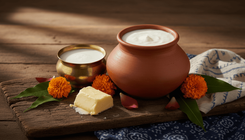
Janmashtami is the festival that marks the birth of Krishna, one of the most beloved deities in the Hindu tradition. The word janmashtami comes from janma, meaning birth, and ashtami, the eighth lunar day. Each year, millions of people observe this day with fasting, worship, special foods and community celebrations that have remained largely unchanged for centuries.



Why Krishna's Birth Matters
Krishna's arrival into the world was not a quiet event. According to tradition, he was born in a prison cell in Mathura to his parents Devaki and Vasudeva. His uncle Kansa, the king of Mathura, had imprisoned Devaki because a prophecy foretold that her son would be his downfall. When Krishna was born at midnight on the ashtami, a miraculous liberation occurred: the prison guards fell asleep, the chains binding his parents broke open, and Vasudeva was able to escape with the newborn to the safer kingdom of Gokul. This journey through a storm, with Krishna sheltered in a basket on his father's head, is remembered as one of the most dramatic moments in Hindu mythology. By dawn, Vasudeva had crossed the river Yamuna and placed Krishna in the care of Yashoda, a cowherd woman, and her husband Nanda. Kansa's plot had failed, and Krishna grew up hidden among the cowherds of Gokul, away from danger.
The Night of Celebration
Janmashtami traditions centre on the midnight hour when Krishna was born. Homes and temples are decorated with flowers, leaves and colourful cloth. Many people fast throughout the day, breaking their fast only after midnight when Krishna's birth is commemorated. The fast is known as a vrat, and the observance carries spiritual significance—it is a way of expressing devotion and drawing closer to Krishna through discipline and reflection.
At midnight, worship begins in earnest. In homes and temples, people gather to sing bhajans, devotional songs that retell Krishna's story and express their love for him. An image or idol of Krishna as a baby is ceremonially placed in a cradle, and this moment is marked with bells, conches and celebrations. Some families bathe the idol, dress it in fine clothes and jewels, and offer prayers of gratitude. The atmosphere becomes joyful and intimate, even in the largest temples. After the prayers and songs, devotees break their fast with sweet foods—milk sweets, kheer (a rice pudding), and fruits are common choices.
Dahi Handi: The Playful Tradition
One of the most recognisable janmashtami traditions is the dahi handi, a custom that reenacts Krishna's childhood love of butter and yoghurt. In Gokul, the young Krishna was known for sneaking into the homes of cowherds and stealing butter and yoghurt to eat and share with his friends. This mischievous habit became central to his legend.
On janmashtami, groups of young people form human pyramids to reach a pot of yoghurt or butter hung high above the ground. The aim is to break the pot and enjoy its contents. This playful competition happens in streets and courtyards across cities and villages, especially in Maharashtra and Karnataka. The dahi handi is not merely entertainment—it represents Krishna's spirit of joy, mischief and community. The teamwork required to build a human pyramid, the laughter that fills the streets, and the sharing of what is retrieved from the broken pot all echo the values Krishna embodied during his years in Gokul.
Fasting and Food
The vrat, or fast, observed on janmashtami varies in strictness from person to person and region to region. Some people eat only fruits and milk products throughout the day. Others eat a single meal. Still others fast completely until midnight, consuming only water. The fast is a personal choice, and the tradition emphasises sincere devotion over rigid rules.
When the fast is broken, families prepare special dishes. In North India, kheer and puri are common. In South India, payasam and other sweets feature prominently. In West India, fafda and jalebi are traditional. Beyond regional differences, almost every household prepares something sweet, reflecting the joy of the occasion. Butter, milk and yoghurt feature in many preparations, connecting the food to Krishna's love of dairy in his childhood stories.
Observance Across India
While the core of janmashtami—fasting, midnight prayer and celebration—is observed across India, regional traditions add their own character. In Maharashtra and Karnataka, dahi handi competitions are central to the festival. In Tamil Nadu and Karnataka, swings called jhoola are set up to rock Krishna's cradle. In West Bengal, the festival is called Janmastami and often includes the singing of Bengali devotional songs. In Uttar Pradesh, especially in Mathura and Vrindavan where Krishna spent his childhood, the celebrations are particularly elaborate, with processions, temple festivals and plays retelling episodes from Krishna's life.
Temple celebrations often attract crowds that grow through the day. Priests perform elaborate pujas, or worship rituals. Bhajans are sung in shifts throughout the night. Some temples distribute prasad, blessed food, to thousands of devotees. The sense of community and shared devotion is as much a part of the festival as the personal spiritual practice.
What Janmashtami Represents
Janmashtami celebrates not just a birth but the arrival of Krishna as an embodiment of divine play and love in the world. The midnight timing reflects the Hindu belief in the auspiciousness of certain hours; midnight itself is seen as a time when the boundary between the earthly and divine grows thin. The fasting represents self-restraint and spiritual focus. The midnight prayer acknowledges the sacred timing of Krishna's appearance. The dahi handi and playfulness honour his nature as a child who brought joy and mischief to the world. Together, these practices form a festival that is at once deeply spiritual and genuinely joyful.
Common questions
When is Janmashtami celebrated?
Janmashtami is celebrated on the eighth lunar day (ashtami) of the dark fortnight in the month of Bhaadra, which usually falls in August or September. The exact date changes each year because it follows the lunar calendar, so it is best to check your local calendar or temple for the specific date.
Can children and pregnant women fast on Janmashtami?
While fasting is a common practice, it is not mandatory. Children, pregnant women and those with health conditions can modify their fast by eating fruits, milk or a light meal instead of fasting completely. Sincere devotion matters more than strict adherence to fasting rules.
What is the difference between Janmashtami and Krishna Jayanti?
Janmashtami and Krishna Jayanti refer to the same festival—they are simply different names. Janmashtami is the more commonly used term in North and West India, while Krishna Jayanti is used in South India. Both celebrate Krishna's birth on the same day.

Related Articles


