
Tilak meaning: the sacred marks on the forehead
Why Hindus wear tilak and what different marks represent

Sunil Chaurasia
06 Nov 2026 • 6min
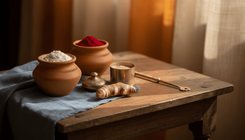
A tilak is a mark worn on the forehead, usually applied with sacred ash, sandalwood paste, or coloured powders. In Hindu tradition, the tilak is far more than decoration. It marks the spot between the eyebrows where many traditions locate the inner eye, the seat of intuition and spiritual insight. The tilak announces devotion and opens the person to the divine presence within.
The Sanskrit word tilaka comes from a root meaning "to mark" or "to anoint". A tilak can be worn daily as part of devotional practice or applied during worship, festivals, or important life events. Its form, colour and meaning change according to the deity worshipped, the sampradaya (spiritual lineage) followed, and the region and family tradition. What connects them all is the intention: the tilak is a physical reminder of spiritual commitment.



Why the forehead
The forehead holds particular spiritual significance in Hindu thought. The space between the eyebrows, called the ajna chakra or third eye centre, is considered the seat of inner consciousness in yoga and tantric philosophy. This is the meeting place of the physical and subtle bodies. Marking it with tilak is an act of consecration—a way of saying that this part of you belongs to the divine.
Different traditions understand this differently. For some, the tilak honours the divine light within each person. For others, it is a sign of surrender to a chosen deity. What remains constant is that the forehead is not just any part of the body, but the location of the mind's seat, where thoughts arise and where we turn our attention inward.
Vaishnava tilak
Vaishnavas—those devoted to Vishnu and his avatars—wear a distinctive U-shaped or V-shaped mark on the forehead. This tilak is called urdhva pundra. It is usually made from white clay or sandalwood paste, often with a red or yellow line down the centre.
The two vertical lines of the urdhva pundra represent Lakshmi and Narayana, Vishnu's consort and the divine itself. The shape encloses and protects the space it marks. A red or yellow line between them represents shakti, divine energy. Some Vaishnavas wear two white lines on the arms or other parts of the body as well, extending their relationship with the deity beyond the forehead.
The style and exact shape of the urdhva pundra can vary between different Vaishnava communities and teachers, but the recognizable U or V form is consistent across the tradition. For a Vaishnava devotee, wearing this tilak several times a day, especially before worship or meditation, keeps the mind fixed on Vishnu's presence.
Shaiva tripundra
Shaivas—those devoted to Shiva—wear three horizontal lines across the forehead, called the tripundra. These are typically made from sacred ash, called vibhuti or bhasma. The three lines are said to represent Shiva's three eyes: the sun, the moon, and fire. They can also represent the three gunas—sattva, rajas and tamas—the three qualities that compose all of nature.
The ash used for tripundra comes from ritual fires, often from the burning of sacred wood. Applying it is an act of purification. In the Shaiva Siddhanta tradition of South India, the tripundra is marked with precise horizontal lines across the forehead and sometimes also on other parts of the body, including the upper arms, shoulders and chest.
Sacred ash carries the symbolism of the cremation ground—the place where all attachment burns away. To wear tripundra is to remember that all material forms are temporary and that Shiva alone is eternal. The ash also cools and purifies, both literally and in spiritual practice.
Other marks and meanings
Beyond these two main forms, many other marks appear in Hindu practice. Followers of Devi wear a crescent moon or a dot (tilak) of vermilion or turmeric paste. Shakta practitioners may mark the forehead with a simple red dot called a bindi or pottu. Followers of Krishna in the Gaudiya Vaishnava tradition sometimes wear gopi chandan, a special clay from Krishna's sacred sites, in a U-shaped form similar to other Vaishnava tilaks but made from this specific substance.
In many regions, a simple red or yellow dot worn for protection or auspiciousness, particularly by married women, serves as a social and spiritual marker. The colour and material vary by region and family custom. During festivals, people may wear coloured marks—vermilion, turmeric, ash or other powders—to celebrate and to show their participation in sacred time.
Even the application of tilak is part of its meaning. The tilak is typically applied with intention and sometimes with a mantra, turning a simple action into a moment of devotion. The hand that applies it matters—the right hand is preferred, representing purity and action aligned with dharma.
Tilak in practice today
Many Hindus apply tilak every day, often before morning worship or meditation. Others wear it during temple visits, prayers, or religious festivals. Some apply it only on special occasions or during particular vrats (observances). The choice depends on personal practice, family tradition, and the demands of daily life.
For those who practise daily, tilak can be a small anchor to spiritual awareness throughout the day. Each time you touch your forehead or catch your reflection, the tilak reminds you of what you have committed to. It brings the abstract idea of devotion into the body and the visible world.
The materials used for tilak are often simple and natural: earth, ash, plant-based pastes, vermilion from minerals. These materials are inexpensive and widely available, which means that tilak remains accessible to everyone, regardless of wealth or social position. A marking that costs nothing carries the same spiritual weight as any elaborate offering.
Common questions
Can anyone wear tilak, or is it only for initiated devotees?
Most Hindu traditions welcome anyone to wear tilak as a sign of devotion. In some samprayas (lineages), particular forms like urdhva pundra are given at initiation, but wearing a simple mark of ash or vermilion is open to all. Family tradition and personal commitment matter more than formal rules.
What should I do if the tilak smudges or comes off during the day?
There is no rule against reapplying it if you wish, though many people simply let it fade naturally. If you wear tilak as part of daily practice, you might reapply it during your evening worship rather than throughout the day.
Is there a difference between the tilak worn by men and women?
The main tilak forms—Vaishnava urdhva pundra and Shaiva tripundra—are worn by both men and women in those traditions. The simple red dot worn by many women, particularly married women, follows different regional and family customs, though these practices are not strictly gendered today.

Related Articles


