
What is a tithi and how is it determined
The lunar day that shapes your calendar
Dharmayana
01 Oct 2026 • 6min
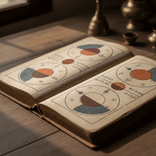
A tithi is a lunar day in the Hindu calendar. It is the most fundamental unit of time in the panchanga, the traditional almanac used to determine auspicious dates for worship, fasting, rituals and ceremonies. Rather than being based on the movement of the sun alone, a tithi is calculated from the positions of both the sun and the moon—and this is what makes it different from the calendar day you use every day.
The word tithi comes from Sanskrit and literally means "to spread" or "to extend". Each tithi spans the time it takes for the moon to move a specific distance ahead of the sun. Because the moon moves constantly, a tithi is not a fixed 24-hour period. Some tithis last less than a day in solar time, while others stretch longer. This is why a single tithi can sometimes occur twice in one calendar day, or why a calendar day might hold no complete tithi at all.



How a tithi is calculated
A tithi is determined by the angular distance between the sun and moon, measured as seen from the earth. Astronomers and panchanga makers use precise calculations based on the positions of these two bodies at any given moment.
The lunar month is divided into two halves: the bright fortnight (shukla paksha) when the moon is waxing toward fullness, and the dark fortnight (krishna paksha) when it is waning. In each fortnight, there are 15 tithis. The cycle begins with the new moon and ends at the full moon (or returns to the new moon again), making 30 tithis in a full lunar month.
Each tithi is identified by its number within the fortnight and by its paksha, or half-month. The first day after the new moon, for example, is the first tithi of the bright fortnight. The 15th tithi of the bright fortnight is the night of the full moon. Then the cycle reverses into the dark fortnight.
The exact moment when one tithi ends and another begins depends on when the angular separation between sun and moon reaches certain thresholds. These calculations require knowledge of the precise orbital positions of both bodies, which is why panchanga makers use mathematical tables or modern astronomical software to determine tithis for any given date.
Tithis and their characteristics
Each of the 15 tithis in a fortnight carries its own name, number and associated qualities. In the bright fortnight, they are numbered one through 15, as are those in the dark fortnight. The names and meanings vary slightly by tradition and region, but the system is consistent across most of Hindu practice.
Certain tithis are considered particularly significant or powerful. The full moon (Purnima) and new moon (Amavasya) are the most important. Ekadashi (the eleventh tithi) is a widely observed fasting day. Ashtami (the eighth tithi) and Chaturdashi (the fourteenth tithi) hold special importance in many rituals and worship practices. Each carries associations with particular deities, practices and spiritual intentions.
The characteristics of a tithi are believed to influence both practical matters and spiritual work. A puja, vrat or other observance begun on an auspicious tithi is thought to carry greater benefit. This is one reason why consulting the panchanga before making important decisions remains central to Hindu practice.
Tithis, dates and the lunar calendar
Because a tithi does not align neatly with the solar day, there is no fixed relationship between a tithi and a date on the modern (Gregorian) calendar. A festival or observance tied to a particular tithi will fall on a different date each year. Navratri, for instance, begins on a specific tithi and can fall anywhere between September and November depending on when that tithi occurs.
This is why a traditional Hindu almanac always shows both the lunar date (tithi) and the solar date (gregorian calendar day) for any observance. When you look up when to begin a vrat or when to perform a puja, you are checking which tithi it falls on, not which day of the week.
Understanding tithis helps explain why important dates in the Hindu year seem to move. They are not moving arbitrarily. They are simply following the lunar cycle, which takes approximately 29.5 days rather than exactly 30. Over time, this difference adds up, shifting the lunar date relative to the solar calendar.
Using the panchanga
To find out which tithi is occurring on any given day, you consult a panchanga. A traditional panchanga is a printed or written almanac that shows, for each day, which tithi is in effect, which nakshatra (constellation) the moon occupies, the day of the week, auspicious and inauspicious timings, and other information useful for planning worship and ceremony.
Modern panchangas are also available online and in apps, many of which allow you to search for specific dates or festivals. These digital versions make it easier to plan ahead, especially if you are following a practice that depends on particular tithis or other lunar markers.
When you see a date listed for a Hindu festival or observance, it is always worth checking the panchanga to confirm the exact tithi. This is especially useful if you are observing a vrat or ritual at home and want to know the precise timing or the best hours for your practice.
Tithis across different regions
While the system of tithis is the same throughout most of India and among Hindu communities worldwide, the panchanga traditions used to calculate them can differ slightly. Different communities may use different astronomical tables or calculation methods, and some regions have their own panchanga traditions passed down through local scholars and temples.
Regional variations are usually small and relate to the exact time a tithi begins or ends in a particular location, rather than differences in which day is which tithi. If you are following a practice from a particular sampradaya or region, checking their specific panchanga ensures you are aligned with the tradition as they observe it.
Common questions
Can a tithi last longer or shorter than 24 hours
Yes. Because a tithi is based on the angular distance between sun and moon, some tithis span less than a calendar day while others stretch longer. This is why a single tithi can occur twice in one calendar day, or why a calendar day might contain no complete tithi at all.
Why do Hindu festivals fall on different dates every year
Hindu festivals are tied to specific tithis rather than fixed calendar dates. Because tithis follow the lunar cycle (approximately 29.5 days) rather than the solar year (365 days), the date when a particular tithi occurs shifts slightly each year on the Gregorian calendar.
How do I find out which tithi is today
Check a panchanga—either a traditional printed almanac or a modern online panchanga app. These show which tithi is in effect on any given day, along with other lunar and auspicious timing information useful for planning worship and ritual.

Related Articles


