
What is a toran and why is it hung at entrances
Auspiciousness Woven Into Your Doorway

Dharmayana
29 Sep 2026 • 5min
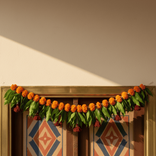
A toran is a decorative garland or ornament hung above a doorway or entrance. You might know it as a door toran, or see it strung with mango leaves, flowers, ribbons or beads. It marks a threshold as sacred space—a place where the everyday world and the inner home meet. This simple practice, found across Indian households during festivals and special occasions, carries deep layers of meaning about welcoming prosperity, inviting auspiciousness, and blessing those who pass through.



The purpose of a toran
A toran serves several purposes at once. Practically, it beautifies an entrance. Spiritually, it acts as a guardian and a blessing. In Hindu tradition, the entrance to a home is understood as a threshold between the outer world and the inner sanctum. A toran marks that boundary and invites auspiciousness—the Sanskrit word shristi—to enter with those who pass through. It is an invitation to purity and good fortune.
The toran also functions as a symbol of welcome. When you hang a toran, you are saying: "This space is prepared. This space is sacred. You are welcome here." For this reason, they appear not only on homes but on the entrances to temples, shops, and community spaces during festivals, marriages, and rituals.
Materials used in torans
The most recognisable toran is woven from mango leaves. Mango leaves hold significance in Indian spiritual practice. They are fresh, green, and auspicious. Many households string them together with marigold flowers—the bright orange or yellow blooms associated with celebration and devotion—to create the classic door toran. The combination of green and gold is itself considered auspicious.
Other torans are made from:
- Beads, often arranged in patterns and strung on thread
- Cloth or embroidered fabrics, sometimes with mirrors or embellishments
- Wood or bamboo frames decorated with paper or paint
- Flowers alone, fresh or dried
- Brass or metalwork, particularly in temple settings
The materials chosen often reflect regional tradition, the resources available, and the occasion being marked. A simple toran of mango leaves takes minutes to make. An elaborate beaded or embroidered door toran might be a treasured object, brought out year after year.
When torans are hung
Torans appear most prominently during festivals. Diwali is the most widely recognised occasion for hanging them—the festival when homes are lit and decorated to celebrate light over darkness. During Diwali, the toran is part of the preparation that welcomes Lakshmi, the goddess associated with prosperity and abundance, to the home.
They are also hung during other celebrations: Holi, the spring festival; Navratri, the nine nights honouring feminine divinity; Onam in Kerala; Pongal in Tamil Nadu; and many regional and family-specific occasions. They may be hung during a housewarming, a wedding, or when a child is born. Some households hang them throughout the year above their puja room or altar.
The tradition is flexible. You might hang a fresh toran weekly or monthly, or prepare one only for major festivals. There is no single rule, and practice varies from household to household and region to region.
How to hang a toran
Hanging a toran is straightforward. The garland or ornament is suspended above the doorframe, usually at the centre, so that anyone entering passes beneath it. It may be tied with string or twine, fastened with nails or hooks, or simply draped in place.
The act of hanging itself is often done mindfully. Some people recite a prayer or mantra as they place it, offering the action to their chosen deity or to the principle of auspiciousness itself. Others make it a family activity—children may help string the flowers or leaves. In this way, the toran carries not just material auspiciousness but the intention and presence of those who created it.
The toran is removed when the festival ends or when it withers. The flowers and leaves are composted or offered to a tulsi plant. Nothing is wasted. The cycle completes and prepares for the next time it is needed.
The deeper meaning of threshold practice
The toran is part of a larger Indian understanding of thresholds as sites of power and care. The practice acknowledges that transitions matter—from outside to inside, from the profane to the sacred, from one state to another. By marking the threshold with beauty and intention, you slow down the passage and make it conscious.
This is why so many ritual practices in Hindu and Indian traditions involve the threshold. The rangoli, the decorative floor pattern, is often drawn at the entrance. Salt or turmeric might be placed at the doorstep. Water is sprinkled. These practices, including the toran, work together to create a sense that this space is held with care and opened with blessing.
For those who practise these traditions, the toran is not superstition. It is a language—a way of speaking to the unseen forces of wellbeing and inviting them into your life. It asks: what do we welcome here? What matters enough to prepare for? By hanging a toran, you answer: auspiciousness, beauty, gathering, celebration, and the sacred presence that flows through everyday life.
Hang one when it feels right. Watch who pauses beneath it. Notice how a simple garland of leaves and flowers changes the feeling of a doorway. The practice is old and it endures because it works—not through magic, but through the power of attention and intention made visible.

Related Articles


