
What is abhyanga and how is it practised
Oil, warmth and the body's own wisdom

Dharmayana
29 Sep 2026 • 6min
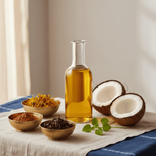
Abhyanga is an Ayurvedic massage practice in which warm oil is applied to the whole body and worked in with the hands. It is one of the most accessible daily rituals in Ayurveda, and one of the most studied. If you have felt how a few minutes of massage can settle your nervous system or ease tension you carry in your shoulders, you have felt what abhyanga is meant to do: it lubricates, calms and nourishes.
The word abhyanga comes from Sanskrit roots meaning "to anoint" or "to smear". In Ayurvedic texts, it is listed among the dinacharya, or daily practices, that support health when done consistently. The practice is described as beneficial for the skin, muscles and joints, for sleep, and for the mind. Historically, abhyanga was part of ordinary life in Indian households. Today, many people encounter it through Ayurvedic clinics or wellness centres, but it is still a practice anyone can learn and do at home.



Why abhyanga matters in Ayurveda
Ayurveda understands the body as made up of tissues called dhatus and kept in balance by three doshas: vata, pitta and kapha. Oil used in abhyanga is thought to work at a deep level, reaching tissues below the skin and helping to move blocked energy through the body's channels, called nadis.
Different Ayurvedic schools emphasise different benefits. Some texts focus on abhyanga as a cooling, grounding practice for people with high vata, the dosha associated with dryness, movement and change. Others describe it as nourishing to the skin and supportive of healthy ageing. What most traditions agree on is this: regular abhyanga is a practice of self-care that signals to your body that you are worth the time and attention.
Oils used in abhyanga
The choice of oil in abhyanga is not casual. Different oils are thought to have different properties, and the right oil for you depends on your constitution and what the season is.
Sesame oil is warming and is often recommended for vata. Coconut oil is cooling and may suit pitta types or warm weather. Brahmi oil or bhringraj oil, infused with cooling herbs, is traditionally used to support the scalp and nervous system. Some people use plain oils; others use oils that have been processed with herbs.
If you are new to abhyanga, start with sesame oil in winter or coconut oil in summer. Warm the oil before you use it, either by running the bottle under warm water or by placing it in a warm water bath. Oil should feel pleasantly warm, not hot. Some people prefer to add a drop or two of an essential oil like sandalwood, though this is optional.
How to practise abhyanga at home
Begin by finding a warm, private space and setting aside 15 to 30 minutes. You may want to lay down an old towel to protect your floor.
Warm the oil as described above. Pour a small amount into your palm and begin on your head. Work the oil into your scalp with your fingertips, using small circular motions. This alone is calming and is worth doing even if you have no time for the rest of the practice.
From there, work downward: the face and neck, the shoulders and arms, the chest and belly, then the legs and feet. On larger areas like the arms and legs, use long strokes in the direction of the heart. On the joints—elbows, knees, wrists, ankles—use circular motions. Use enough oil that your skin feels slippery but not dripping.
Pay attention as you go. Notice where you hold tension. Notice your breathing. This is not a passive experience; you are the one giving the massage, which makes it a form of self-awareness as much as self-care.
Once you have oiled your whole body, sit or lie still for 10 to 20 minutes if you can. This allows the oil to soak into your skin. Then bathe or shower in warm water. You may use a gentle soap or simply rinse with water. Some people prefer to bathe in warm water first, then apply oil to damp skin, which they find easier to work with and cleaner afterwards.
When and how often to practise
Ideally, abhyanga is done daily, or at least three or four times a week. Many people find that doing it even once a week brings noticeable benefit. There is no harm in practising it daily if it fits your life.
Some traditions suggest that abhyanga is especially valuable in late autumn and winter, when vata naturally rises and the body tends toward dryness. Others recommend it year-round, adjusting the oil to the season. If you are menstruating, pregnant, have just eaten a heavy meal, or are unwell with fever, most Ayurvedic teachers suggest pausing the practice.
The time of day matters less than consistency. Some people oil themselves first thing in the morning and then bathe before breakfast. Others do it in the evening, as a way to prepare for sleep. Choose a time when you can move slowly and not rush.
What to expect
In the first weeks of practising abhyanga, you might notice that your skin feels softer or that you sleep more deeply. Over months, many people report that their joints feel less stiff, that their skin glows, and that they feel more grounded and less anxious. These changes are gradual. Abhyanga is not a dramatic intervention; it is a conversation with your own body over time.
If you have very sensitive skin, very oily skin, or any skin condition, start with a lighter touch and less oil. Some people find that a very thin application suits them better than a generous one. You can adjust the practice to fit your body, not the other way around.
The warmth of the oil and the rhythm of your own hands are at the heart of abhyanga. This is why it works best as something you do for yourself rather than something done to you, though receiving abhyanga from a trained practitioner is also valuable. When you do it yourself, you build a relationship with your own body, you learn what you need, and you give yourself a gift of time and attention that Ayurveda counts as essential medicine.

Related Articles


