
What is achamana and how is it performed
Sipping, Speaking, Starting Pure

Dharmayana
01 Oct 2026 • 6min
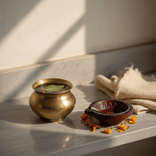
Achamana is a ritual sipping of water that prepares your body and mind for puja, meditation, or any sacred work. It is one of the simplest practices in Hindu ritual life, yet it carries real weight: you are acknowledging that you have come from the ordinary day into something intentional. The practice cleanses not just the mouth, but also marks an inward shift toward the sacred.
The word achamana comes from the idea of sipping or drinking. In practice, you take a small quantity of water—ideally water that has been touched by tulsi (holy basil) leaves, or water blessed in some way—and sip it three times while speaking or thinking particular words. The ritual varies slightly across regions and sampradayas, but the underlying intention is constant: to purify yourself before approaching the divine.



Why achamana matters
Achamana rests on the principle that the mouth is a gateway. You use it to eat, to speak, sometimes to lie; it holds the traces of the day's food and words. Before you speak a mantra, before you offer a prayer, the tradition says, you should cleanse this gateway. It is not superstition but practicality dressed in spiritual form. You are stopping. You are saying to yourself: something different begins now.
The practice also protects your inner space. When you sip the water with intention, you are not just washing the mouth. You are inviting a state of awareness. The ritual becomes a hinge between the scattered mind and the collected one. This is why achamana opens many Hindu practices—it is a gentle boundary you draw.
The water for achamana
Traditionally, achamana is performed with water from a sacred source: a river, a temple tank, or water blessed through ritual. But most people perform achamana with filtered or boiled drinking water, sometimes with a few tulsi leaves placed in it. The water should be clean and cool.
Some families keep tulsi in their home altar or puja room specifically for this. A single leaf in the water is enough. If you have no tulsi, plain water is sufficient. What matters is that you use water consciously, not thoughtlessly—that you choose it for the purpose.
How the sipping is done
The practice consists of three sips. For each sip, you take a small quantity of water—roughly a sip that fits in your mouth—and drink it. While you sip or just after, you may speak a mantra or simply hold your attention on the water and its cooling effect.
In many traditions, the three sips are accompanied by three names. One common practice is to say the names Achyuta, Ananta, and Govinda—three names of Krishna—one for each sip. Another is to speak the names silently. Some practitioners simply sip without words, letting the act itself be the prayer.
In South Indian traditions, especially among those following Iyengar ritual practice, achamana typically involves sipping water three times with specific mantric syllables. The exact form depends on your sampradaya (tradition) and your guru's teaching. What you are learning here is the principle and the common form; if you have a specific teacher or family practice, that instruction takes precedence.
When and where to perform achamana
You perform achamana before most formal puja. It is done at the start of your prayer, your meditation, your japa (repetition of a mantra). Some people do achamana before eating prasad (blessed food) or before touching sacred texts. A few do it each morning as part of their daily practice, simply as a way of beginning the day consciously.
You need not wait for a temple or a formal setting. Achamana is a home practice, something you can do at your altar or in any quiet place. Many people keep a small vessel of water near their puja space for this reason. Even a cup of water will do. The simplicity is the point: achamana asks nothing you do not have.
The inner meaning
Achamana is not meant to be rushed. It is a moment of pause. When you sip, you feel the water's coolness in your mouth, its taste, its presence. You may notice your breath slowing. This is achamana working: the physical act carries you into a quieter state.
Over time, the practice becomes a signal to your whole being that you are stepping from the everyday into something deeper. The water, the pause, the intention—together they create a threshold. Crossing it is the beginning of all sacred practice.
When you cannot perform achamana
If you do not have access to water, or if you are ill or fasting, you can perform achamana mentally. The intention and attention matter as much as the physical gesture. Sit quietly, bring water to mind, and take three conscious, slow breaths, speaking the mantras silently or simply feeling the intention. The principle is preserved even when the form must change.
How to perform achamana
- Prepare your water Pour a small amount of clean, cool water into a cup or small vessel. If you have tulsi leaves available, place one or two in the water. Sit in a calm place, ideally facing east or north.
- Settle your mind Take a moment to sit quietly. Feel your breath becoming steady. Acknowledge that you are about to enter a sacred practice.
- Take the first sip Bring the vessel to your lips and take a small sip of water. As you do, you may silently speak or think the name Achyuta, or simply hold your attention on the water and the gesture of sipping.
- Take the second sip After a brief pause, take another sip. This time, you may speak or think the name Ananta, or continue in silence, letting each sip be an act of intention.
- Take the third sip Complete the practice with a third sip. You may speak or think the name Govinda, or simply sit for a moment after drinking, feeling the coolness in your mouth and the shift in your awareness.
- Proceed to your practice When you are ready, begin your puja, meditation, mantra repetition, or whatever sacred work you have prepared for. The achamana is now complete.
Common questions
Can I do achamana with any water?
Ideally, use clean drinking water. Water from a sacred source or blessed water is traditionally preferred, but what matters is that the water is clean and that you use it with intention. Some people add tulsi leaves for their spiritual significance. Plain filtered water works perfectly well for daily practice at home.
Do I have to say mantras during achamana?
No. The mantric names such as Achyuta, Ananta, and Govinda are commonly used, especially in South Indian traditions, but some practitioners perform achamana in complete silence, holding their attention on the water and the gesture itself. Follow the practice of your sampradaya or teacher if you have one; if not, either way is valid.
What if I can't drink water before my practice?
You can perform achamana mentally or symbolically. Sit quietly, bring water to mind, take three conscious slow breaths, and speak the mantras silently or simply hold the intention. The gesture adapts to circumstance; the principle of purification and readiness remains.

Related Articles


