
What is chandan and why is it applied
The sacred paste of cooling and devotion

Dharmayana
29 Sep 2026 • 6min
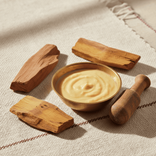
Chandan is a sandalwood paste traditionally applied to the forehead, body and offerings in Hindu ritual and daily practice. Made from sandalwood powder mixed with water or oils, it cools the body, prepares the mind for worship, and marks the wearer as devoted. You will see it worn as a tilak (a mark on the forehead), smeared across the chest during puja, and offered to murtis in temples.
The word chandan comes from Sanskrit and refers both to the sandalwood tree itself and to the paste prepared from its heartwood. Sandalwood grows across India, most abundantly in Karnataka. The tree is valuable: its wood has been harvested for centuries for incense, perfume, medicine and ritual use. The paste you use today is made by grinding dried sandalwood into powder, then mixing it with water, oils, or other ingredients to reach the right consistency.



How chandan is made and what it contains
Traditional chandan paste is simply sandalwood powder and water. Grinding the wood releases its pale yellow colour and distinctive cool, woody fragrance. Some preparations add a few drops of rose water, milk, or sesame oil to improve the texture and scent. Others mix in turmeric, bhasma (ash from ritual fires), or the powder of other auspicious materials.
You can buy ready-made chandan paste from temple shops and online, or make it at home by adding water to sandalwood powder until it reaches a smooth consistency. Store-bought versions often last longer because they contain preservatives. Home-made paste should be used within a few days. The finest chandan comes from the heartwood of older trees, which has deeper colour and stronger fragrance.
Kashmiri sandalwood and Australian sandalwood are also available, though Indian sandalwood from the Western Ghats is most prized in traditional practice.
The cooling quality and Ayurvedic use
One reason chandan is so widely used is that it cools. In Ayurveda, the healing tradition that developed alongside Dharma, sandalwood is known as a cooling, pitta-reducing substance. When you apply it to your skin, the sensation is genuinely cooling, which can be soothing in hot weather and calming to an overheated mind.
In Ayurvedic medicine, chandan is used to treat skin conditions, inflammation, and fever. It is applied as a paste to burns, rashes and insect bites. A small amount mixed into water is sometimes taken internally for its cooling effect on digestion and the nervous system. You will find it recommended in Ayurvedic texts like the Bhava Prakasha as beneficial for the skin, for the eyes, and for clarity of mind.
This cooling, calming quality is why chandan appears so often in spiritual practice. It prepares the body for stillness and the mind for worship.
Chandan in daily and ritual practice
In puja, chandan marks the transition from everyday life into sacred time. Before or during worship, a devotee applies a tilak of chandan to the forehead, often in a vertical line or crescent shape. The mark shows that the wearer is approaching the divine with reverence and intention. In many temples, the priest applies chandan to the foreheads of worshippers as a blessing, sometimes mixing it with vibhuti (sacred ash) or kumkum (red powder).
During daily practice at home, applying chandan can be part of your morning ritual or before meditation. Some people wear it throughout the day as a mark of their devotion. Others apply it only when visiting a temple or performing puja. The practice is entirely flexible—there is no single rule.
Chandan is also offered to murtis. The priest or devotee applies a mark of chandan to the forehead of the image, to its chest, or to the top of the head (the crown or shikhar). This offering shows respect and brings the worshipper's intention into the presence of the divine. During major festivals, large quantities of chandan are used to mark murtis and to distribute as blessing among the gathered community.
In some regional traditions, chandan is mixed with other substances. In South Indian temples, it may be combined with vibhuti or with powdered flowers. The exact practice varies by region and by temple lineage, but the purpose remains the same: to mark the sacred and to connect the devotee with it.
When and how often to wear chandan
There is no strict rule about when you should wear chandan. Many people apply it daily as part of their morning practice. Others wear it only on festival days, during visits to the temple, or when performing puja at home. If you are beginning a new spiritual practice, wearing chandan while you pray or meditate can help anchor your intention and signal to yourself that you are entering sacred time.
The most common way to apply chandan is to take a small amount—about the size of a pea—on your finger, then draw a vertical line from the space between your eyebrows upward to the centre of your forehead. Some people make a wider mark, or a crescent, or a dot. The exact shape depends on your lineage, your region, or simply your preference. There is room for your own practice here.
If your skin is sensitive, test chandan on a small area first. Pure sandalwood is usually gentle, but any paste may irritate if you are allergic to sandalwood or to one of the added ingredients. If you have very sensitive skin, dilute the paste with more water or apply it more sparingly.
The spiritual meaning of chandan
In Dharma, chandan represents purity, coolness and devotion. The act of applying it is an act of preparation—you are cooling your body, calming your mind, and marking yourself as engaged in sacred practice. The fragrance itself is considered auspicious and is believed to carry the blessings of the ritual space.
Chandan also appears in stories and teachings as an offering fit for the divine. In temples and in homes, it is given alongside flowers, incense, and fruit. When a guru or elder offers you chandan, it is a sign of their blessing and affection.
The paste connects you to an ancient lineage of practice. People have applied sandalwood to their foreheads and to their murtis for thousands of years. When you do the same, you are joining that continuity.
Buying and storing chandan
Good chandan should smell distinctly of sandalwood—a cool, woody, slightly sweet fragrance. Paste that smells artificial or chemical is likely to be heavily adulterated or synthetic. Buy from a trusted temple shop, a reputable online seller, or an Ayurvedic retailer. The price of pure sandalwood has risen sharply over recent decades because the tree is now rare, so very cheap chandan is usually not what it claims to be.
Keep chandan in a cool, dry place in a sealed container. If you make it fresh at home, use it within a few days, or store it in the refrigerator to extend its life. Commercial pastes will usually keep for several months if you have not opened them, and for a month or two after opening if the container is sealed tightly between uses.
If you travel, a small amount of chandan powder takes up almost no space and lasts much longer than paste. You can mix it with a little water wherever you are.

Related Articles


