
What is dhoop and how is it used in worship
Fragrant Smoke, Sacred Offering

Dharmayana
29 Sep 2026 • 5min
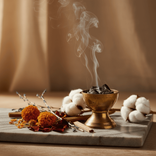
Dhoop is a solid incense offering made from fragrant materials like resins, powders and natural gums. It is burned during puja to create fragrant smoke that carries prayers and invocations to the divine. Unlike the stick form of agarbatti or the cone form used in some traditions, dhoop is typically a loose blend or compressed cake that is lit on charcoal, producing a steady, aromatic smoke.
The word dhoop comes from Sanskrit and means smoke itself. In worship, dhoop serves both a practical and spiritual purpose: it purifies the space, creates an atmosphere of reverence, and offers sensory experience that helps focus the mind during prayer and ritual.



The components of dhoop
Dhoop is made from natural materials gathered traditionally from forests, farms and aromatic plants. Common ingredients include gum resins like frankincense and myrrh, sandalwood powder, camphor, dried flowers and herbs such as rose petals and marigold, and sometimes powdered bark from aromatic trees.
The precise blend varies by region and by the deity or occasion being honored. A dhoop offered during Durga Puja might emphasize different scents than one prepared for Saraswati worship. Family traditions and local practices shape these blends, so there is no single "correct" composition of dhoop.
Traditionally, the ingredients are ground by hand using a mortar and pestle, then sometimes pressed into cakes or kept as a loose powder. This labour-intensive process is why prepared dhoop, sold in packets, has become common in modern practice. Whether homemade or purchased, the principle remains the same: natural materials burned to create sacred smoke.
Dhoop in the sequence of puja
Dhoop is offered at a specific point in most puja rituals. After the deity has been invoked and offered water for washing and other physical offerings like flowers, dhoop is typically lit. It follows the initial preparations and often comes before or alongside other aromatic offerings like agarbatti, which is stick incense.
The devotee lights the dhoop on a piece of charcoal held in a small dish or censer, called a dhoop dani in Hindi. As the smoke rises, it is wafted toward the deity or the altar using the hand or a fan, creating a visible offering that engages the senses. Some practitioners move the censer in circles, creating patterns of smoke as part of the ritual gesture of aartti, though aarrti more formally refers to the offering of light.
The timing and manner of offering dhoop may differ between sampradayas and regional traditions. In some households, it is lit at the beginning of worship; in others, it is central to the climax of the ritual. What remains consistent is the understanding that the smoke carries the devotee's intention upward.
Spiritual significance of the smoke
In Hindu philosophy, the ascending smoke of dhoop symbolizes the rising of prayers and devotion toward the divine. The fragrance itself is believed to purify the mind and create a sacred space, lifting consciousness from the mundane toward the spiritual.
The sense of smell is considered particularly direct in its connection to memory and emotion. Fragrant smoke thus works on multiple levels: it produces a physical transformation of the space, it engages the mind through sensory experience, and it anchors the ritual in something tangible and real. A room filled with the scent of dhoop becomes recognizably different from an ordinary room.
Different scents are also said to have different qualities. Sandalwood is traditionally associated with calm and meditation. Rose is linked to devotion and the heart. These associations are not arbitrary superstition but reflect how fragrance actually affects mood and attention in practice.
Dhoop, agarbatti and other incenses
Dhoop is one form among several aromatic offerings in Hindu worship. Agarbatti, the stick form of incense, is more commonly used in homes today because it is more convenient: it lights easily and burns without requiring charcoal. It serves the same purpose as dhoop but in a different form.
Dhoop's advantage is that it often contains a higher proportion of solid resins and materials, creating a richer, more substantial smoke. It can also be precisely measured by the devotee, allowing customization of how much incense is offered. Agarbatti offers consistency and ease.
In temples and during larger ceremonies, both forms may be used together. The choice between them often comes down to practicality and personal or household preference rather than any spiritual hierarchy. Both carry prayer and intention upward in smoke.
Preparing and offering dhoop at home
If you wish to offer dhoop during your own worship, begin by obtaining either prepared dhoop or the materials to blend your own. Prepared dhoop is widely available from temple shops and online retailers. Charcoal discs designed for incense burning can be found easily alongside it.
Light the charcoal disc in a heat-safe dish or censer and wait for it to become hot enough that it glows slightly. Sprinkle a small amount of dhoop onto the charcoal and let it begin to smoke. You can then hold or position the censer to direct the smoke toward the deity or altar, or simply let it burn as part of the ritual space.
The key is intention. Whether you light dhoop with elaborate ceremony or as a simple, quiet act during your personal prayers, the offering is made through attention and sincerity. The smoke carries what you bring to the ritual: your focus, your reverence, and your connection to the divine.
As you work with dhoop over time, you may develop preferences for certain scents and blends. This growing familiarity makes the ritual practice deeper. Dhoop is not simply a gesture; it becomes a language between you and what you worship.

Related Articles


