
What is panchamrit and why is it offered
Five sacred substances blessed and shared

Dharmayana
29 Sep 2026 • 5min
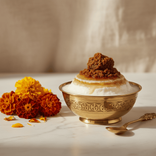
Panchamrit is a mixture of five sacred substances that is prepared and offered during puja and important rituals in Hindu practice. The word itself means "five nectars" - panch for five, amrit for nectar - and the preparation is meant to carry blessing and purification. It is offered to a deity during worship, and then distributed to worshippers as a sanctified gift called charanamrit or mahaprasad.
The practice appears across different regional and sampradaya traditions, though the five ingredients can vary. Most commonly, panchamrit is made from milk, yoghurt, ghee, honey and jaggery. These are mixed together in a bowl or vessel, sometimes with water, and offered with devotion. The sweetness of the mixture and the richness of its ingredients reflect the idea of divine abundance and grace.



Why panchamrit is offered
Offering panchamrit is part of the ritual of worship itself. When you perform puja, the movement from preparing offerings to receiving them back as blessings is central to how the worship works. You offer what is precious - foods that nourish, ghee and honey that carry warmth and healing - and by offering them with attention and faith, you consecrate them. This transforms them from ordinary food into something that carries the energy of the ritual and the deity.
The distribution of charanamrit, the portion that has been offered and blessed, creates a bridge between the sacred and the everyday. It is a way of receiving the deity's grace directly, through the body. Everyone present at the puja, regardless of caste or status, receives the same prasad. This is one of the meanings of prasad - something that levels all who receive it, because it comes from the divine.
The five ingredients and their meanings
Milk represents purity and nourishment. In yoghurt, milk is transformed - this represents the many forms the divine can take. Ghee is used in ritual fire and carries the quality of heat and transformation. Honey is sweetness and the flowering of life. Jaggery, made from the juice of sugarcane, is the sweetness of the earth itself, unrefined and whole.
Some families or communities may use slightly different combinations. In some places you will find coconut milk instead of milk, or dates instead of jaggery. The principle remains: five substances that represent different qualities of nourishment and blessing, brought together as one.
How panchamrit is made and offered
Panchamrit is prepared in a clean vessel, usually made of brass, silver, or other auspicious metal. Each ingredient is added with intention - not carelessly mixed as you might stir a drink. The proportions can vary; there is no single rule written in stone, though equal parts of the five ingredients, or slightly more ghee and honey, is common. Some prepare it fresh for each puja; others keep a small amount prepared.
During the puja, the panchamrit is offered to the deity's image or murti with words of devotion. After the main offerings are made - flowers, incense, lamp - the panchamrit is presented with a spoon or poured into a small vessel before the deity. It sits there while prayers continue, and then it is distributed to those present.
The charanamrit that is returned to the worshippers is considered blessed. People typically touch it to their forehead before consuming it, a gesture of reverence and acceptance. It is meant to be sipped or eaten slowly, not gulped down. Some people prefer to take only a small spoonful; others take more. There is no rule about quantity - the blessing comes from the sincerity with which it is received.
Panchamrit in different contexts
Panchamrit is most commonly offered in home puja, but also appears in temple worship, in lifecycle rituals like naming ceremonies and weddings, and in seasonal festivals. During Diwali, holi, or other celebrations, panchamrit is prepared as part of the festival worship. The ingredients themselves - milk, ghee, honey - are basic to Indian food and ritual, so the preparation sits easily within daily life.
In some traditions, similar sacred mixtures are prepared with regional variations. The principle of mixing nourishing substances and offering them as blessed food exists in different forms across India. What matters is the intention and the understanding that the offering transforms both the food and the person who receives it.
What to do if you are receiving panchamrit
If you attend a puja or worship where panchamrit is offered, receive it as a gift without hesitation or self-consciousness. You may take as much or as little as feels right to you. Some people hold it in their palm and sip from their hand; others use a small cup or spoon. There is no single correct way. The moment of receiving it is one of exchange - you have witnessed and participated in the worship, and now you receive something that has been blessed through that worship. That is the whole of it.
If you wish to prepare panchamrit yourself for home worship, begin with clean hands and a clean vessel. Add the five ingredients with attention and perhaps a simple prayer. Keep it in a cool place if you are not using it immediately. Use it within a few hours or a day - panchamrit made with milk will not keep for many days. When you offer it to the deity in your worship, do so with the same care and devotion as the ritual itself.

Related Articles


