
What is Pongal and how is it celebrated
Harvest gratitude, family and new beginnings
Dharmayana
01 Oct 2026 • 6min
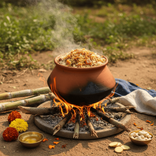
Pongal is a harvest festival celebrated primarily in Tamil Nadu and parts of Andhra Pradesh and Karnataka, marking the season when the sun moves into Makara Rashi (Capricorn) in the zodiac. The word "pongal" means "to boil over" or "overflow" in Tamil, referring to a central ritual of the festival where new rice is cooked in a clay pot until it boils over the rim - a symbolic gesture of abundance and prosperity.
The festival is steeped in gratitude. After months of tending crops, families gather to thank the sun (Surya), cattle, and the land itself for a successful harvest. Pongal is essentially a conversation between people and the forces - natural and divine - that have fed them through the year. It is celebrated for four days, each with its own focus and customs.



The four days of Pongal
The festival unfolds as a sequence of celebrations, each layered with meaning.
Bhogi Pongal marks the beginning. On this day, families clean their homes thoroughly and light bonfires, burning old clothes, utensils and other items that are no longer needed. The bonfire is called bhogi mantai. This act of clearing is both practical and spiritual: it symbolises the shedding of the old and making space for fresh beginnings.
Thai Pongal is the main celebration and falls on the day when the sun transitions into Makara Rashi. Early in the morning, families prepare the pongal dish - new rice cooked with lentils, jaggery, ginger, cashews and ghee in a new clay pot. The pot is placed on an open fire and watched until the rice boils over the edge. As it overflows, people exclaim "Pongalo Pongal!" - a joyful acknowledgement of abundance. The cooked rice is offered to the sun as gratitude, then distributed as prasad (blessed food) to family members and neighbors.
Mattu Pongal is dedicated to cattle. Cows and bulls are bathed, their horns are painted in bright colours, and garlands of flowers and sugarcane are hung around their necks. They are paraded through streets and fed with the pongal dish. In some places, Jallikattu - a traditional bull-taming event - takes place (though this remains controversial and has legal restrictions in many areas). The day honours cattle as partners in the agricultural cycle.
Kannu Pongal is the final day, a time when children play games and fly kites. Flying kites is such a central part of the celebration that the festival is sometimes called Uttarayan in other parts of India where the same solar transition is observed.
Regional variations and names
While Pongal is the Tamil term, the same harvest season is observed across India under different names. In Punjab, the festival is Lohri. In Gujarat, it is Makar Sankranti. In Karnataka, it is known as Makar Sankramana or sometimes Pongal as well, since many parts of the state have significant Tamil populations. In Andhra Pradesh, it is celebrated as Bhogi and Sankranti.
Though the names and specific customs differ, the underlying gratitude to the harvest and the sun is common. In many places, families make traditional sweets and savoury snacks - jaggery-sesame brittle in Gujarat, til laddoos in North India, pongal rice in Tamil Nadu - and exchange them with loved ones.
The spiritual significance
Pongal marks a turning point in the solar calendar. In Jyotisha (Vedic astrology), Makara Sankranti - the sun's entry into Capricorn - is considered an auspicious time. The sun moves into a sign associated with material prosperity and progress. For this reason, many people undertake journeys, start new ventures, or make significant life decisions around this time.
The festival also reflects a fundamental principle in Sanatan Dharma: the acknowledgement of interdependence. Humans depend on the sun's warmth, on the soil's fertility, on cattle for transportation and sustenance. Pongal is a pause in the calendar to recognise and give thanks for these relationships.
The ritual of cooking in a clay pot - rather than metal - is another layer of meaning. Clay is an element that connects the earth, and cooking in it on an open flame completes the cycle of earth, fire, water and air. The boiling over of rice is not an accident to be prevented, but the whole point: abundance so complete that it cannot be contained.
Preparing for Pongal at home
If you wish to observe the festival, begin a few days before by cleaning and decorating your home. Some families make rangoli (decorative patterns) at the entrance using coloured rice, flowers and powder. On the morning of Thai Pongal, gather new rice, lentils, jaggery, ghee, ginger, cashews and flowers.
Prepare the pongal dish by cooking the rice and lentils together with jaggery and ghee until soft, then tempering it with cashews and ginger fried in ghee. Some families also add raisins and banana chips. Place the finished dish on a banana leaf or plate, arrange it as an offering, and say a prayer of gratitude to the sun and to all that has nourished you. Then share it with family and those around you.
The essence of Pongal is not in perfecting the ritual but in the sincere intention: acknowledging the cycles of nature, expressing gratitude, and marking a moment of renewal with those you love.
Common questions
Is Pongal celebrated on the same date every year?
No. Pongal follows the solar calendar, not the lunar calendar. Thai Pongal falls on the day the sun enters Makara Rashi in the zodiac, which typically occurs in mid-January in the Gregorian calendar, but the exact date shifts slightly each year. Check your local Panchanga or festival calendar for the precise date in your region.
What exactly is the pongal dish made of?
The pongal dish is made from newly harvested rice cooked with split yellow lentils (moong dal) in ghee and jaggery until soft. It is then tempered with cashews, ginger and sometimes raisins or banana chips fried in ghee. Families may add their own variations with coconut, pepper or curry leaves depending on regional preference.
Can I celebrate Pongal if I do not have cattle?
Absolutely. While Mattu Pongal honours cattle, the core of the festival - offering gratitude and sharing the pongal dish - can be observed in any home. Many urban families now celebrate by preparing the pongal dish at home and sharing it with family and neighbours, honouring the spirit of the festival without livestock.

Related Articles


