
What is Raksha Bandhan and why is it celebrated
A sister's sacred thread, a brother's pledge
Dharmayana
01 Oct 2026 • 6min
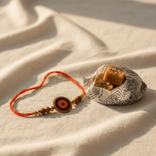
Raksha Bandhan is a festival that celebrates the bond between brothers and sisters. On this day, a sister ties a rakhi—a sacred thread or decorative bracelet—on her brother's wrist as a symbol of love and protection. In return, the brother pledges to care for and protect his sister. The word raksha means protection and bandhan means bond, so Raksha Bandhan is literally the tying of a protective bond.
The festival is observed during the month of Shravana, on the full moon day known as Shravana Purnima. It is rooted in ancient Hindu tradition and appears in stories and texts across the Indian subcontinent, though the rituals and significance vary by region and family practice.



The story and mythology behind Raksha Bandhan
Several stories explain the origins of this festival, each showing why protection and promise matter in the relationship between brothers and sisters.
One well-known story involves the deity Krishna and his cousin Draupadi. According to the tale, when Krishna cut his hand, Draupadi tore a piece of cloth from her sari and tied it around his wound to stop the bleeding. Krishna was moved by her care and promised to protect her always. This act became the first rakhi—a thread tied not by a biological sister, but by someone offering care and receiving a vow in return.
Another story is set in the Mahabharata and involves the demon king Bali and the goddess Lakshmi. When Lakshmi wanted to be close to the virtuous Bali, she tied a rakhi on his wrist, establishing a sisterly bond with him. He welcomed her as a sister and promised to keep her safe. Over time, Lakshmi used her closeness to bring prosperity and protect the kingdom.
These stories reflect a deeper truth: rakhi is not only about blood relation. It is about the protective promise that can exist between any two people—siblings, cousins, friends—where one person commits to looking after another.
How Raksha Bandhan is observed
On the day of Raksha Bandhan, the sister performs a small ritual. She applies tilak (a mark made with vermillion, sandalwood paste or other sacred substances) on her brother's forehead. She then ties the rakhi on his wrist while reciting prayers for his health, happiness and long life. The ritual is often accompanied by sweets, gifts and warm words between siblings.
In many families, after the sister ties the rakhi, the brother gives a gift to his sister and formally accepts his role as her protector. Some brothers also tie a rakhi on their sisters' wrists to pledge mutual protection. In modern practice, the ritual may be simpler or adapted to suit the family's circumstances—a phone call, a video call, or the sending of a rakhi in the post can stand in for the physical ceremony, though the intention remains the same.
The rituals vary by region and community. In some parts of India, the rakhi is a simple thread; in others, it is an ornate bracelet. In some families, the ritual is a formal affair; in others, it is casual and intimate. What remains constant is the exchange of love and the renewal of the promise to protect and care for one another.
The meaning of the rakhi itself
A rakhi can take many forms. Traditionally, it is a thread of silk, cotton or gold, sometimes with a small amulet or charm attached. Today, rakhis are sold in an enormous variety of designs, from simple threads to elaborate bracelets decorated with beads, stones or bells.
Regardless of its appearance, the rakhi is a symbol. It represents the tie that binds two people together. It is a physical reminder of an invisible bond. When a sister ties a rakhi on her brother's wrist, she is not just fastening a thread; she is making a declaration: you are important to me, you matter, and I trust you to show up for me.
For the brother, wearing the rakhi is a daily commitment. Each time he looks at it, he is reminded of his promise. In this way, the thread itself becomes a form of practice—a gentle, constant prompt to live up to the values the bond represents.
Raksha Bandhan beyond siblings
Although Raksha Bandhan is most commonly celebrated between biological brothers and sisters, the festival has expanded to include other relationships. Cousins celebrate together. Close friends may exchange rakhis. In some traditions, a woman can tie a rakhi on any man she wishes to declare as a brother, and he accepts that bond.
In temples and spiritual communities, devotees sometimes tie rakhis on the deity they worship, renewing their spiritual bond and asking for blessings. Priests in temples may also perform a ritual where devotees tie rakhis on the deity's image.
This broader interpretation reflects the truth at the heart of the festival: protection and care are not limited to blood relations. Raksha Bandhan recognises that we all need people to look out for us, and we all have the capacity to look out for others. The festival is an opportunity to acknowledge these bonds—however they came to be—and to reaffirm them with intention and gratitude.
Why Raksha Bandhan matters today
In modern life, siblings often live far apart. Brothers and sisters may go weeks without speaking. Raksha Bandhan creates a moment to reconnect, to put aside any distance or disagreement, and to remember what matters.
For many people, the festival offers a chance to reflect on what protection means in a changing world. It might mean emotional support, practical help, or simply being present when someone needs you. The ritual itself is simple, but it carries weight. To tie or wear a rakhi is to say: this bond is real, this promise is sincere, and I will show up.
Whether you celebrate with a biological sibling, a cousin, a close friend or in a spiritual context, Raksha Bandhan invites you to affirm the bonds of protection and care in your own life. The thread is just thread, but the commitment behind it is what endures.
Common questions
When is Raksha Bandhan celebrated each year
Raksha Bandhan is observed on Shravana Purnima, the full moon day in the month of Shravana. The date shifts each year according to the Hindu lunar calendar, usually falling between mid-July and mid-August.
Can a sister tie a rakhi on a friend instead of a brother
Yes. While the festival is traditionally between siblings, a sister can tie a rakhi on anyone she considers a protective figure in her life—a cousin, uncle, close friend or mentor—and that person can accept the bond as a brother would.
What should a brother give when his sister ties a rakhi
There is no fixed rule. Traditionally, a brother gives a gift and accepts his role as protector. The gift can be anything from money to a chosen present, but the emotional commitment matters more than the material value.

Related Articles


