
What is tulsi and why is it kept at home
Sacred Leaf, Living Practice

Dharmayana
23 Sep 2026 • 6min
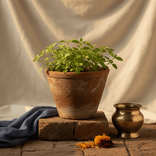
Tulsi, also known as holy basil, is a plant deeply woven into Hindu devotional life and Indian homes. You'll find it growing in pots on windowsills, in courtyards and on temple steps across India. People grow it not only because it is useful—though it is—but because tending it and offering its leaves forms part of daily spiritual practice for many households.
The name tulsi comes from Sanskrit and means "the incomparable one". The plant is sacred to Krishna and Lakshmi in Hindu tradition, and this spiritual significance shapes how it is grown and used. It is not treated as an ornamental plant or a mere herb; it carries meaning in the household.



What tulsi is
Tulsi is a small woody shrub in the mint family, usually reaching knee-height or a little taller. The plant has small oval leaves, often slightly fuzzy, and can flower in shades of white, pale pink or purple depending on the variety. It grows readily in India's climate and thrives in pots or open ground with sun and regular watering.
There are several varieties cultivated in India. Rama tulsi has green leaves and is very common. Krishna tulsi (also called Shyama tulsi) has darker, purplish leaves and is considered especially sacred. Vana tulsi grows wild. Each has its own qualities and associations, though all are valued in practice.
The plant thrives in warmth and sunlight. In most of India, it grows year-round outdoors, though it may weaken in deep winter cold. Many households keep their tulsi pot near an entrance, on a window or courtyard ledge where it receives light and can be tended daily.
Why tulsi is kept at home
Spiritual devotion is the primary reason tulsi is grown in Hindu homes. The plant is dedicated to Krishna and Lakshmi, and tending it is an act of worship. Many people perform daily puja (ritual worship) before the tulsi plant, offering water, flowers or prayers. This practice is called tulsi puja and forms part of morning or evening devotion in believing households.
In some traditions, a dedicated platform or raised bed for the tulsi plant, often made of brick or stone, is built in the courtyard. This is called the tulsi vrindavan. The structure itself becomes sacred ground—a small shrine for home worship.
The presence of a thriving tulsi plant is also understood as a sign of blessing on the home. A well-tended plant is seen as evidence that the household is auspicious and spiritually attentive. There is a sense that the plant responds to care and devotion.
Practical uses of tulsi
Tulsi has long been used in Ayurveda, India's traditional medical system. The leaves are valued as a support for respiratory health and are commonly brewed as a tea, often mixed with ginger and honey. During colds or when the respiratory system needs support, tulsi tea is a household remedy.
The plant is also used in the kitchen. Fresh tulsi leaves add a peppery, slightly sharp flavour to dishes and can be scattered into cooked vegetables or rice. The leaves have antimicrobial qualities and have been part of food preservation practice.
Because of these practical benefits, tulsi remains worth keeping even in households where the spiritual dimension is secondary. But in most Indian homes, both reasons—devotion and utility—exist together. The separation between the sacred and the practical is not sharp.
Growing and caring for tulsi
Tulsi is straightforward to grow in most of India. It needs sunlight—ideally four to six hours daily. It prefers well-draining soil and should not be left waterlogged. In the heat of summer, it may need watering daily; in cooler months, less often. The exact schedule depends on your climate and the soil in your pot.
The plant will flower naturally. Some people remove flowers to encourage leaf growth; others leave them, as the flowers too are offered in worship. Seed can be collected from mature plants and sown in spring, which is how many households renew their tulsi from year to year.
Pests occasionally trouble tulsi, but the plant is generally hardy. If an established plant does weaken or die, it is common practice to clear the pot respectfully and replant. There is no sense that this is failure—it is simply the cycle of tending a living thing.
Tulsi in daily life
In devotional households, tulsi features in morning and evening worship. Water is offered, prayers spoken, sometimes flowers or incense placed near the plant. The practice is brief but consistent—part of the rhythm of the day.
If someone in the household falls ill, tulsi leaves may be added to water or tea. Some people keep dried tulsi leaves on hand for this purpose. The leaves are also used in certain ritual contexts—during times of loss or spiritual importance, tulsi is offered or burned in specific ways that vary by region and family tradition.
The presence of a living tulsi plant also anchors the home spiritually for many people. It is a visible, daily reminder of devotion and attention. Tending it becomes a form of meditation: watering, observing the new growth, noting when buds appear.
Bringing tulsi into your home
If you wish to grow tulsi, you can begin with seeds or a small plant from a nursery. Choose a location that receives good light. A pot with drainage holes, filled with soil suited to herbs or vegetables, is usually sufficient. Water regularly and let the plant establish itself.
If you approach it devotionally, you might establish a simple routine: water or light worship each morning, or the offer of a few leaves. The practice need not be elaborate. Many households simply greet the plant with respect and attention.
Tulsi grows well in most of India's climate zones. Even in cities, on balconies or windowsills, it can flourish with basic care. It is a plant that rewards attention and is patient with the occasional mistake.
The reason so many Indian homes keep tulsi is this: it is at once a spiritual practice, a daily ritual, a source of help when needed, and a living presence that connects the household to a tradition that spans centuries. To tend tulsi is to participate in something larger than oneself.

Related Articles


