
What is yoga nidra and how does it work
Rest that Heals, Awareness That Watches

Dharmayana
29 Sep 2026 • 6min
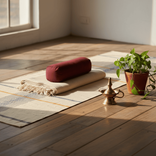
Yoga nidra is a guided practice of relaxation and awareness that sits somewhere between waking and sleeping. The name means "yogic sleep", and the state it creates feels like sleep, but your mind remains conscious throughout. You lie down while listening to a guide's voice—usually on a recording or in a class—who leads you through a systematic journey of relaxation. By the end, your body feels deeply rested and your mind feels settled, sometimes more so than after hours of ordinary sleep.
What makes yoga nidra different from simply lying down or taking a nap is that it is a structured practice with a specific purpose. It is not meditation, though it is meditative. It is not sleep, though it is restorative. It is closer to a guided journey through the layers of your mind, and it works because of how the practice meets your nervous system exactly where it is.



How yoga nidra differs from sleep
When you sleep, your consciousness goes offline. You lose track of time and place. Yoga nidra does something else: it lets your body rest while keeping a thread of awareness alive. This is actually closer to how you move between waking and sleeping in ordinary life—that twilight moment when you are aware you are drifting off. Yoga nidra extends and stabilises this state.
Because you stay conscious, you absorb what the guide says. When someone guides you to relax your right arm, you listen and consciously direct that relaxation. Your rational mind is not solving problems or planning the day. Instead it is following an instruction, which is its own form of rest.
This matters because some kinds of tiredness cannot be fixed by sleep alone. Sleep restores your body and sorts your memories, but it does not always calm the nervous system when it has been running in overdrive. Yoga nidra addresses this directly. It tells your nervous system: you are safe, you can let go.
The structure of a yoga nidra session
A typical yoga nidra session lasts between twenty and forty-five minutes. You lie on your back in a comfortable position—usually on a yoga mat or blanket, with a pillow under your head and knees if you need it. The guide begins by inviting you to notice your body and breath without changing them.
Then the practice moves through several stages. The guide helps you set an intention, called a sankalpa (a resolve or affirmation). You repeat it silently to yourself a few times. Then the guide takes you on a systematic tour of your body, asking you to bring your attention to each part in turn—your right hand, right arm, right shoulder, and so on. This is called body scanning, and it teaches your mind to release tension from each place you notice it.
Next, the guide often works with sensations and opposites. You are invited to feel heaviness, then lightness. Warmth, then coolness. This trains your mind to move fluidly between opposite states, which helps it become less rigid and reactive.
Towards the end, the guide brings you back towards waking. Your awareness is guided to your breath, then to the sounds around you, then to a gentle movement of your fingers and toes. By the time the practice ends, you are fully awake, but you carry the relaxation with you.
How yoga nidra affects your nervous system
The nervous system has two main branches: the sympathetic (the accelerator, active in stress and alert) and the parasympathetic (the brake, active in rest and digest). Most of us spend too much time in sympathetic activation. Anxiety, work pressure, and the constant stimulus of daily life keep us pressed on the gas.
Yoga nidra activates the parasympathetic nervous system. It does this through several mechanisms at once. The reclined position and guided breath awareness signal safety to your body. The slow, repetitive instructions give your mind something to follow without the pressure of performance. The body scan teaches your nervous system that you can notice tension and release it.
Over time, regular practice trains your nervous system to access this restful state more easily. This is one reason people who practice yoga nidra often notice changes that last beyond the session itself—better sleep, less anxiety, greater calm during the day.
What happens to your brain during yoga nidra
Brain imaging studies have shown that during yoga nidra, activity in different parts of the brain changes in specific ways. The default mode network—the brain's internal chatter system that produces mind-wandering and self-referential thinking—quietens down. At the same time, areas involved in awareness and attention remain active, which is why you stay conscious.
This combination is unusual. In sleep, consciousness dims. In ordinary waking, the default mode network chatters away. Yoga nidra creates a third state where the mind is quiet but aware. Some describe this as witnessing consciousness—you are watching your own experience without being caught in it.
Who benefits from yoga nidra
Yoga nidra is accessible to almost anyone. You do not need flexibility, strength, or prior experience. It works well for people with insomnia, because it teaches the nervous system what relaxation feels like without the pressure of having to sleep. It helps those carrying stress and anxiety. Parents, carers, and anyone in demanding work often find it restores them more quickly than other practices.
People recovering from injury or illness sometimes use yoga nidra because it allows deep rest without physical exertion. Practitioners of other yoga traditions use it to deepen their practice. Even people who are sceptical of meditation sometimes find yoga nidra accessible, because you are not asked to "empty your mind" or manage your thoughts—you are simply invited to lie down and listen.
How to begin practicing yoga nidra
You can start with recordings. Many are available online, free or inexpensive. A session of twenty to thirty minutes is enough to feel the effect. Choose a time and place where you will not be interrupted. You need only a yoga mat or blanket and a quiet spot.
If you prefer guided classes, many yoga studios and wellness centres now offer yoga nidra sessions. Some teachers also offer it online. A few minutes of practice will show you whether it speaks to your system. For most people, the benefit arrives immediately—you come out of the session knowing you have rested in a way that feels real.
The more often you practice, the faster you slip into the state and the deeper you go. Many people find a weekly session enough to notice a real shift in how they carry stress. Others practice several times a week, or even daily. Start with what fits your life, and let the practice show you what it can do.

Related Articles


