The Veena: Stringed Sound of India's Soul
An iconic instrument that weaves together India's history, mythology, and spirituality, resonating through centuries.
Ashtavakra
15 Oct 2024 • 6min
The veena is one of the oldest and most revered musical instruments in India, with a history and mythology that make it truly unique. The veena symbolizes India's musical heritage, deeply rooted in its cultural, historical, and spiritual traditions.
The veena, known in ancient texts as the "vina," dates back thousands of years. The Rigveda, one of India's oldest scriptures, mentions a stringed instrument resembling the veena (Rigveda 10.89.6: "Play the veena with joyous hearts, like the singers that sing for Indra, spreading the music that uplifts the soul"). In this verse, the veena is highlighted as part of musical performances during sacred rituals, emphasizing its importance in religious ceremonies.
Between the 7th and 18th centuries, the veena evolved into different forms. Each variation has its own unique sound and construction suited to different types of music.
Types of Veenas
Rudra Veena: A large instrument used in Dhrupad music, associated with Lord Shiva, is known for its deep, resonant sound.
Saraswati Veena: Named after Goddess Saraswati, known for its deep and melodic sound. Popular in Carnatic music.
Vichitra Veena: A fretless instrument with a distinctive sliding tone, offering a unique musical experience.
The veena's construction is a craft by itself. Typically, it is made of jackfruit wood, with a long neck and a rounded body. It features four main strings and three drone strings, which allow the musician to create a deep, resonant sound. Playing the veena demands skill, precision, and devotion—qualities deeply respected in Indian classical music.
Mythological Significance
The veena holds an esteemed place in Indian mythology.
The Rudra Veena is also linked to the legendary figure Ravana, who was said to be an exceptional player of this instrument, showcasing his deep connection with music and devotion to Lord Shiva.
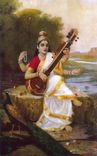
Goddess Saraswati, the deity of wisdom, learning, and the arts, is almost always depicted holding a veena. This imagery represents the link between music and wisdom. Saraswati's veena is said to represent the human mind and the universe, where each string symbolizes a different aspect of existence—thought, emotion, spirituality, and creativity.
The veena is also associated with Narada, the celestial sage and a divine musician who roamed the worlds singing praises of the divine. Narada's veena, often called the Mahati Veena, is said to spread knowledge, devotion, and harmony wherever its notes are played.
The Veena in Indian Classical Music
The veena is one of the key instruments in Carnatic music, which originated in South India. Great veena players, such as Veene Sheshanna and Balachander, have contributed to the instrument's rich legacy, taking it to concert stages around the world. Its deep, meditative sound perfectly complements the intricate compositions of Carnatic ragas, making it an ideal solo instrument as well as an accompaniment.
In Hindustani classical music, the Rudra Veena played a significant role, especially during the Dhrupad era, one of the oldest forms of Indian classical music. The Rudra Veena, named after Lord Shiva (also known as Rudra), was used by musical giants like Zia Mohiuddin Dagar to produce profoundly spiritual music.
Symbol of Cultural Heritage
The veena is a symbol of India's cultural and spiritual heritage, balancing knowledge, creativity, tradition, and innovation. The instrument has been intricately linked with temple rituals, sacred hymns, and devotional music, symbolizing purity and devotion.
Today, although modern instruments have taken the spotlight, the veena continues to captivate those who listen. The veena's unique sound has also been featured in popular mass media, such as the iconic song 'Chinna Chinna Aasai' from the Tamil movie 'Roja' and 'Mere Haathon Mein Nau Nau Choodiyan' from the Hindi movie 'Chandni,' showcasing its timeless appeal. It represents a bridge—connecting modern listeners with an ancient heritage, a sound that speaks directly to the soul.

Related Articles
The Nature of Consciousness: A Hindu-Neuroscience Mashup
Consciousness Unveiled: Bridging Hindu Wisdom and Neuroscience for a Deeper Understanding of the Mind
Ganesha: Spread across the Indosphere
From Indus to Pacific: Ganesha's Journey Through the Indosphere
Try a fuller and better experience on the
Dharmayana App